
Top 5 student cities in Germany
Discover the favourite cities for university students in Germany and what makes them unique.
If you’re thinking about doing an academic exchange in Europe, discovering the 5 best cities to study in Germany is an excellent starting point. This country offers quality education, an international atmosphere and a wide range of cultural activities in all its cities.
In this guide, we present five ideal destinations for your university experience, along with their pros and cons, the most renowned universities in each city, and the average rent for students.
When looking for accommodation, platforms such as Erasmus Play make the whole process easier: you can compare different verified options, view real photos, filter by location and book securely 100% online. This means you arrive at your new destination with your accommodation sorted from home!
Berlin

The German capital is definitely one of the most popular university destinations in the country. It’s a city with a youthful, multicultural and creative atmosphere that stands out for its historical sites, nightlife, museums, and technology. In other words, it’s a city that has everything you need for an unforgettable experience! It’s also one of the German cities with the largest number of international students.
Pros and cons of studying in Berlin
Living and studying in Berlin offers many benefits, although there are also certain negative aspects to consider during your stay.
Pros of studying in Berlin
- Its cultural, artistic and leisure offerings are very varied, with plenty of options for different tastes every day of the week.
- It has an international and multicultural student community.
- Their universities offer very high-quality teaching and the university atmosphere is very lively.
- Ideal for travelling to other German and European cities.
Cons of studying in Berlin
- Finding affordable accommodation can be very difficult, especially if you leave it until the last minute.
- The formalities (registering your residence, health insurance, university procedures) can be lengthy and tedious.
- The cost of living has increased in recent years.
- Winters are cold, grey, and long.
Top Universities in Berlin
Berlin is home to some of the most prestigious academic institutions in Germany and throughout Europe.
Freie Universität Berlin (Free University of Berlin)
This institution is highly regarded internationally, especially in fields such as political science, philology, biology and medicine. It has four campuses in very different areas of Berlin.
In this guide, we tell you more about their locations and how to find accommodation near the Free University of Berlin.
Humboldt-Universität zu Berlin (Humboldt University Berlin)
The HU is one of the oldest and most renowned universities in the country, with a strong focus on humanities, social sciences, and law. It has three campuses in the city: two in the Mitte district (Mitte Campus and Nord Campus) and one in Adlershof (the Adlershof Campus in Berlin's Science City).
You can find out more about their campuses and areas in our guide to housing close to Humboldt University Berlin.
Student Housing in Berlin
Compared to other German cities, the cost of student accommodation in Berlin is considered high, although not the highest in the country. It varies greatly depending on the area, but it’s usually between €550-800 per month for a room in a shared flat and around €750 in private student residences. A studio flat away from the city centre costs from €630 per month upwards. Whichever type of accommodation you choose, we recommend that you start looking as early as possible!
Are you looking for accommodation in Germany? Read our guide to student accommodation in Berlin, with the best neighbourhoods and approximate prices.
Munich

Located in the Bavarian region in the south of the country, it’s another of the cities that welcomes the most university students in Germany every year. It’s elegant and peaceful, yet at the same time full of life, with cafés, festivals, and green spaces everywhere. It’s also located at the foot of the Alps and has a very attractive job market in fields such as engineering, technology and automotive.
Pros and cons of studying in Munich
Studying in Munich can be incredible, although there are also some drawbacks that are worth considering.
Pros of studying in Munich
- Living in a city with an exceptional quality of life, as well as being very safe.
- Its universities are recognised worldwide for their prestige.
- Its location is ideal for travelling to other cities in Germany and the rest of Europe.
- Opportunities in the technology and science job market.
Cons of studying in Munich
- It has one of the highest living costs in Germany.
- It’s one of the cities that welcomes the most students, so demand for accommodation is very high and competitive.
- The climate is colder and rainier than in other regions of the country.
Top Universities in Munich
Munich is home to some of the most renowned institutions in Germany and Europe:
Ludwig-Maximilians-Universität München (Ludwig-Maximillians University in Munich.)
It’s another one of the oldest and most prestigious universities in the country, excelling in social sciences, medicine, and humanities. It’s also the second largest institution in Germany in terms of student numbers. It has several campuses in the city, located in neighbourhoods such as Maxvorstadt, Schwabing, Hadern, Ludwigsvorstadt-Isarvorstadt, and Oberschleißheim.
Find out more about the best neighbourhoods and practical tips in the guide to accommodation near Ludwig-Maximillians University in Munich.
Technische Universität München (Technical University of Munich)
This university, founded in 1868, is a European leader in engineering, computer science, natural sciences, and technology. Its campuses are located in Munich and other cities, so it’s important to identify which one you’ll be attending in order to choose your accommodation.
Find more useful information in our comprehensive guide to housing close to the Technical University of Munich.
Student Housing in Munich
Accommodation in Munich is the most expensive in Germany and demand is very high, so you need to start looking as soon as possible to find something that suits your budget. As a rough guide, a single room in a shared flat usually costs between €700 and €1,000 per month, and a whole flat usually costs €1,200 upwards.
If you’d like to know more about student accommodation in Munich, you’ll find all the information you need in our guide.
Cologne
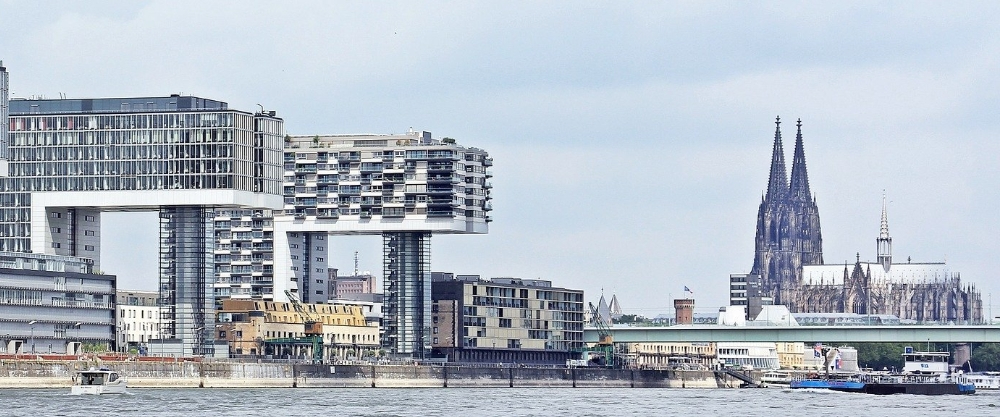
This is one of the liveliest and most open cities in Germany, known for its youthful atmosphere. In fact, its atmosphere is multicultural and cheerful, with plenty of bars and cultural events (such as its famous carnival). It’s an ideal destination for those who want a university experience in a big city, but with a more relaxed pace compared to Berlin or Munich.
Pros and cons of studying in Cologne
Cologne stands out for its benefits for students, but it also has some weaknesses.
Pros of studying in Cologne
- A large, multicultural university city, but with a more relaxed and friendly atmosphere than the previous ones.
- Its cultural and historical offerings are extensive, and its nightlife is very varied.
- Lower cost of living than in Munich or Berlin.
- Ideal location for visiting neighbouring countries such as Belgium and the Netherlands.
Cons of studying in Cologne
- Its climate is very humid (lots of rain and constantly cloudy weather).
- The demand for accommodation is very high, especially at the beginning of the academic year.
- The city centre can be very noisy as it receives many tourists.
Top Universities in Cologne
Cologne has many well-known institutions in Germany:
Universität zu Köln (University of Cologne)
The University of Cologne is one of the largest in Germany, particularly renowned in areas such as economics, law, and social sciences. Its faculties are spread across different parts of Cologne, both in central areas and in the surrounding areas.
Discover the most recommended areas and approximate prices in our guide to accommodation near the University of Cologne.
Technische Hochschule Köln (TH Köln)
The Technical University of Cologne specialises in engineering, design, and digital media. Its campuses in Cologne are located in Südstadt and Deutz, and it also has faculties in other locations.
Find out more details in the guide to housing close to the Cologne University of Applied Sciences.
Student Housing in Cologne
The cost of accommodation in Cologne is considered moderate compared to other large German cities. For example, a room in a shared flat usually costs €450 upwards, while a studio flat in a central area starts at €750 per month.
Are you planning to study in Germany? Don't miss our guide to student housing in Cologne, with up-to-date neighbourhoods and prices.
Frankfurt
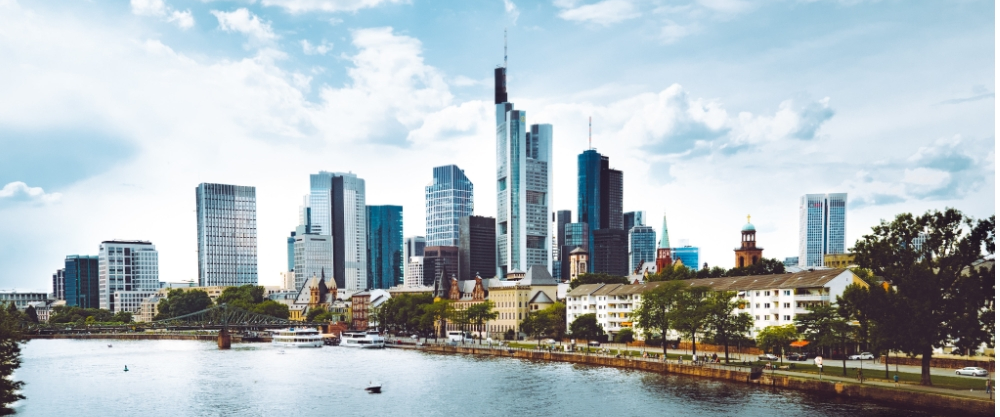
Frankfurt is a modern, international city. It’s the country's main financial centre, home to the European Central Bank and thousands of companies. Admittedly, this gives it a more corporate atmosphere than the other cities we mentioned, but it also offers a wealth of job opportunities. In addition, it has neighbourhoods with a lively student atmosphere, parks along the River Main and a fairly vibrant nightlife.
Pros and cons of studying in Frankfurt
The academic experience in Frankfurt has many advantages, but certain disadvantages could influence your stay.
Pros of studying in Frankfurt
- A city with an international atmosphere and lots of students.
- Its universities are renowned for their high standard of teaching.
- A variety of job and internship opportunities.
- Good public transport and connections with the rest of Europe.
Cons of studying in Frankfurt
- Cost of living and rent are higher than the national average.
- The atmosphere may feel more business-like than student-like.
- It has a good cultural offering, but it’s more expensive than in other cities.
Top Universities in Frankfurt
Frankfurt has institutions of high academic standing and an international focus.
Goethe-Universität Frankfurt (Goethe University)
This public university is one of the most renowned in Germany, and 20 of its students have received Nobel Prizes. Its main campus is the Westend Campus, but it has four other campuses in other neighbourhoods.
Find out everything you need to know about the university and its surroundings in our guide to accommodation near Goethe University Frankfurt.
Frankfurt University of Applied Sciences
Frankfurt UAS stands out for its practical training approach, preparing students for the job market. Its main campus is the Nibelungenplatz Campus, where all its facilities are located.
We tell you more about the university and the surrounding neighbourhoods in our guide to housing close to the Frankfurt University of Applied Sciences
Student Housing in Frankfurt
Accommodation in Frankfurt tends to be expensive, and you have to search in advance due to the high demand. As a price reference, the average cost of a room is usually between €600-850 per month, while a studio flat typically costs at least €1,000 per month.
If you’re going to study in this famous German city, check out our guide to student accommodation in Frankfurt, with information on prices and recommended neighbourhoods.
Freiburg im Breisgau
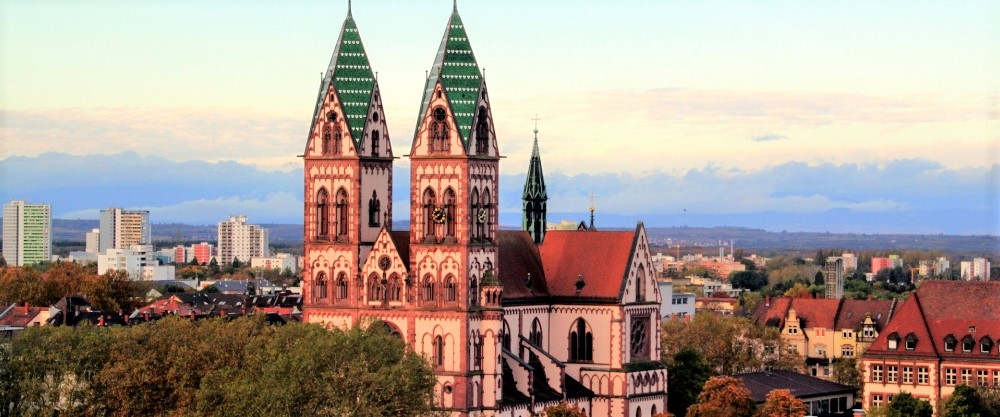
Freiburg im Breisgau is one of the most charming university cities in southern Germany. Surrounded by nature and close to the Black Forest, it offers a peaceful atmosphere geared towards outdoor life. It’s ideal for those seeking a more relaxed lifestyle, but with quality education. Furthermore, although it’s a medium-sized city, it has everything: universities, cafés, parks, and leisure areas.
Pros and cons of studying in Freiburg
Choosing Freiburg as a place to study has many advantages, although certain disadvantages may affect the experience.
Pros of studying in Freiburg
- A very safe, green city with an excellent quality of life.
- Lively student and university atmosphere.
- Good connections for visiting the Black Forest, Switzerland, and France.
- A strong focus on sustainability and the environment.
Cons of studying in Freiburg
- The nightlife is quieter than in larger cities.
- Rainy weather for much of the year.
- Accommodation availability is limited, so you need to find something as soon as possible!
Top Universities in Freiburg
Freiburg boasts prestigious academic institutions.
Albert-Ludwigs-Universität Freiburg (University of Freiburg)
It’s one of the oldest and most respected universities in Germany, renowned for its medicine, natural sciences, and humanities. Its buildings are spread across different areas of the city, both in the Altstadt and the surrounding areas.
Student Housing in Freiburg
The cost of accommodation in Freiburg is generally medium-high compared to other medium-sized cities. A room in a shared flat usually costs between €500 and €700 per month, while a studio flat starts at €600 (although in areas further away from the centre).
If you’re planning your stay in this beautiful city in southern Germany, our guide to student accommodation in Freiburg will help you find the ideal place for you.
Find accommodation in Germany with Erasmus Play
Discovering the top 5 cities to study in Germany is just the first step towards an unforgettable university experience. Each destination has its own style: Berlin and Munich stand out for their academic and career opportunities, Cologne for its youthful atmosphere, Frankfurt for its international character, and Freiburg for its natural surroundings.
If you’re planning your arrival, Erasmus Play helps you find verified accommodation in any of the five cities. You can compare rooms, flats and residences from different platforms in one place, with up-to-date information and real photos. What's more, all accommodation is verified so you can book with confidence and start your university experience in Germany without any worries.
Other guides on studying and living in Germany
Below you’ll find more guides on these cities, so you can learn more about the ones that caught your attention.
Studying in Germany
- Erasmus in Germany
- Erasmus in Berlin
- Erasmus in Munich
- Erasmus in Cologne
- Erasmus and Frankfurt
- Erasmus in Freiburg im Breisgau
Accommodation and student residences in Germany
- The best neighbourhoods for students in Berlin
- The best neighbourhoods for students in Munich
- The best neighbourhoods for students in Cologne
- Guide of Student residences in Berlin
- Guide of Student residences in Munich
- Guide of Student residences in Frankfurt
- Guide of Student residences in Cologne
- Flatshare in Berlin
- Flatshare in Munich
- Flatshare in Cologne
- Flatshare in Frankfurt
- Flatshare in Freiburg im Breisgau